No advanced maths needed to understand how computers learn
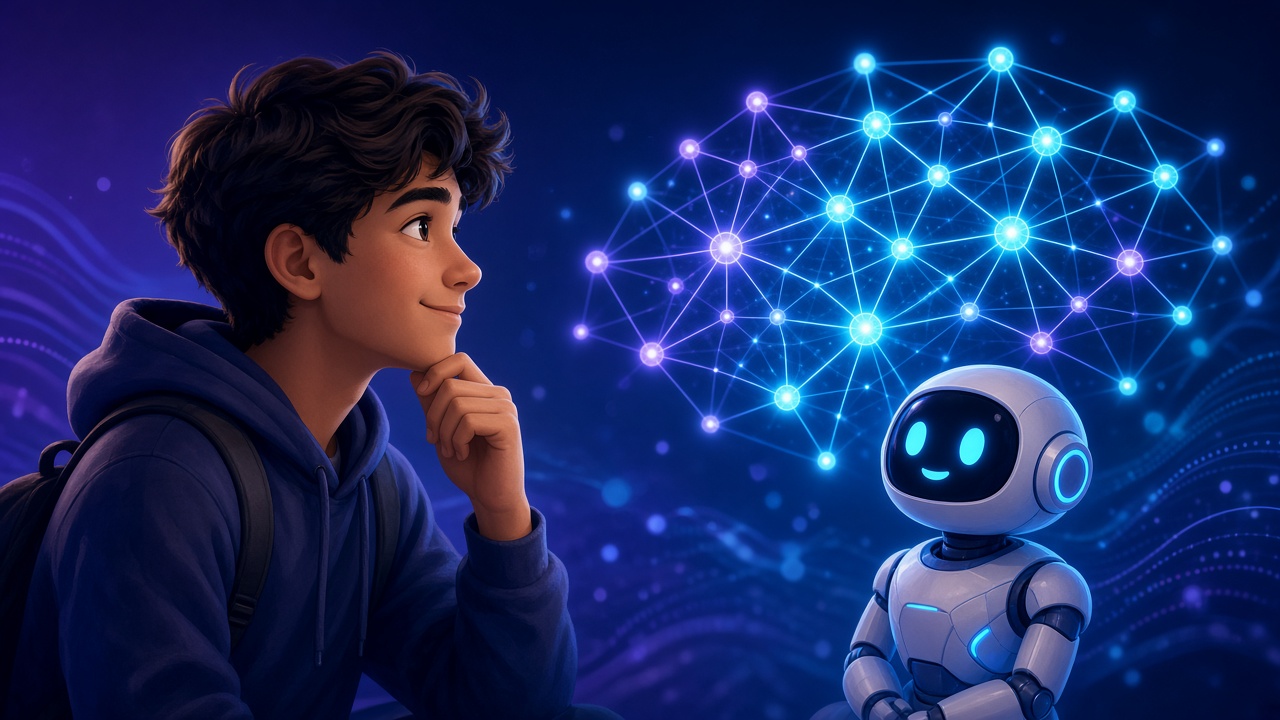
Machine learning is a way of teaching computers to find patterns in examples. This guide explains the idea in plain language with activities for students.
Introduction
You have probably heard that machine learning powers everything from spam filters to the recommendations on your favourite video app. But what is it, really? And can a school student understand it without advanced maths? Yes. This guide explains machine learning in plain language, with everyday examples and ideas you can try at home or in class.
Machine learning in plain words
Machine learning in one sentence. Machine learning is a way of teaching computers to find patterns in examples, so they can make predictions or decisions without being given every rule by hand. In ordinary programming, a person writes exact rules: "If the temperature is above 30, print 'hot'." In machine learning, you show the computer many examples, and it works out the rules itself.
A simple example: teaching a computer to spot fruit. Imagine you want a computer to tell apples from bananas. You could try writing rules ("apples are round, bananas are long"), but real fruit comes in many shapes and colours. Instead, you show the computer hundreds of labelled photos: "this is an apple", "this is a banana". Over time, it notices patterns in colour, shape, and texture. When you later show a new photo, it guesses which fruit it is. That is the heart of machine learning: learn from examples, then predict on new ones.
Key terms and the three types of learning
Key words every student should know. Data: the examples the computer learns from, such as photos, numbers, or text; Features: the useful details in the data, such as colour or length; Label: the correct answer attached to an example, such as "apple"; Model: the learned pattern, which is what makes the predictions; Training: the process of showing examples so the model learns; Testing: checking the model on new examples it has not seen before; Accuracy: how often the model gets the right answer.
The three main types of machine learning.
1. Supervised learning. The model learns from labelled examples. Predicting whether an email is spam, or recognising handwritten digits, are classic cases.
2. Unsupervised learning. The model gets data without labels and looks for natural groups. For example, grouping songs that sound similar without being told the genres.
3. Reinforcement learning. The model learns by trial and error, receiving rewards for good actions. This is used in teaching software to play games, and in some robotics research.
Real-life uses and the limits of machine learning
Where students already meet machine learning. Voice assistants that understand spoken questions; Photo apps that group faces or suggest edits; Maps that predict traffic; Keyboards that suggest the next word; Online shops and video apps that recommend items. Noticing these examples is a great starting point for classroom discussion.
Machine learning is not magic: its limits. It is important for students to understand where models go wrong. Bad data gives bad results. If a model sees only red apples, it may fail on green ones; Bias can creep in. If the training data does not represent everyone fairly, the model may treat some groups worse than others; Models can be confidently wrong. A high-confidence guess is not always a correct one; Models do not truly understand. They find statistical patterns, not meaning in the human sense. Teaching these limits early helps students become thoughtful, critical users of AI.
Try it yourself: activities and project ideas
Try it yourself: simple activities.
Unplugged activity: be the model. Make a set of cards describing animals by features (has wings, number of legs, size). Give a friend some labelled cards to study, then test them on new unlabelled cards. You have just done training and testing by hand.
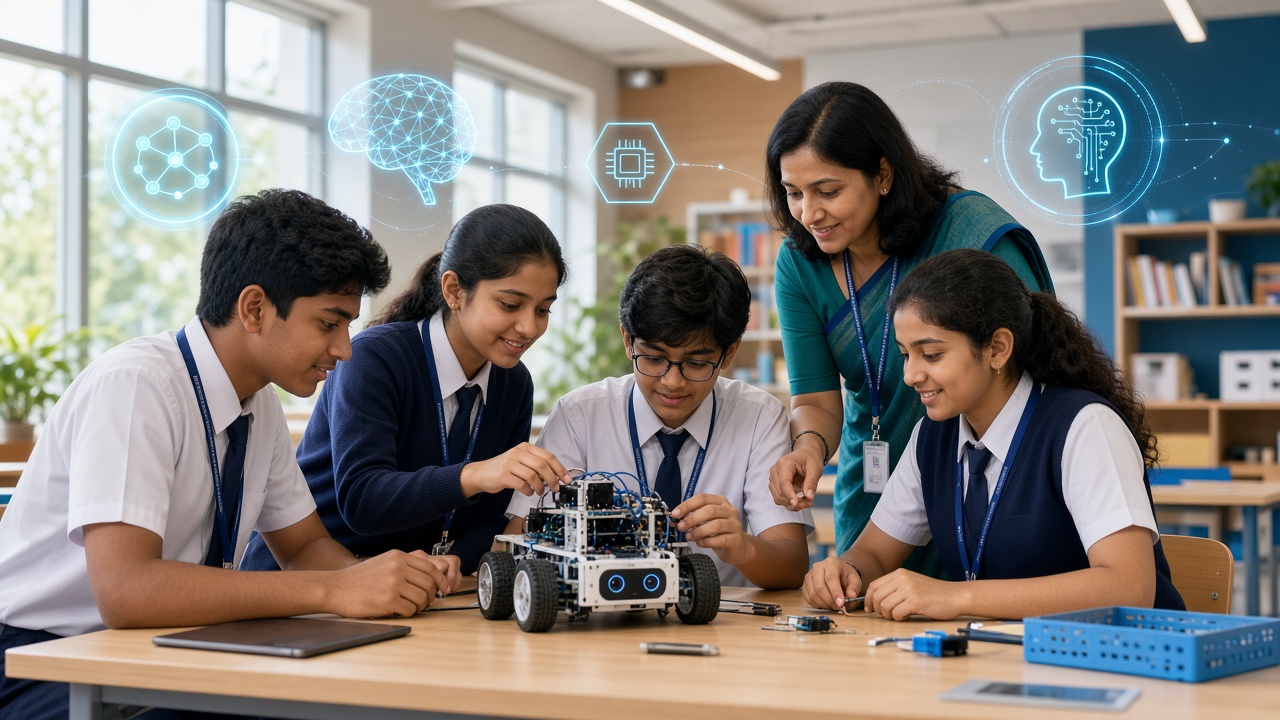
Beginner-friendly online tools. Several free, browser-based tools let students train a small image or sound model by showing examples through a webcam or microphone, with no coding required. Always check a tool's age rules and privacy terms with a parent or teacher before use, and avoid uploading personal photos.
Python path for older students. Students who know basic Python can later explore beginner libraries for machine learning and try small projects, such as predicting a number from a small data set or classifying simple flower measurements. A teacher or mentor can help with setup.
Do students need advanced maths. Not at the beginning. Understanding the idea, using tools, and interpreting results needs only basic comfort with numbers and percentages. Deeper study later involves statistics, algebra, and calculus, but school students can build a strong foundation without them. Curiosity matters more than formulas in the early stage.
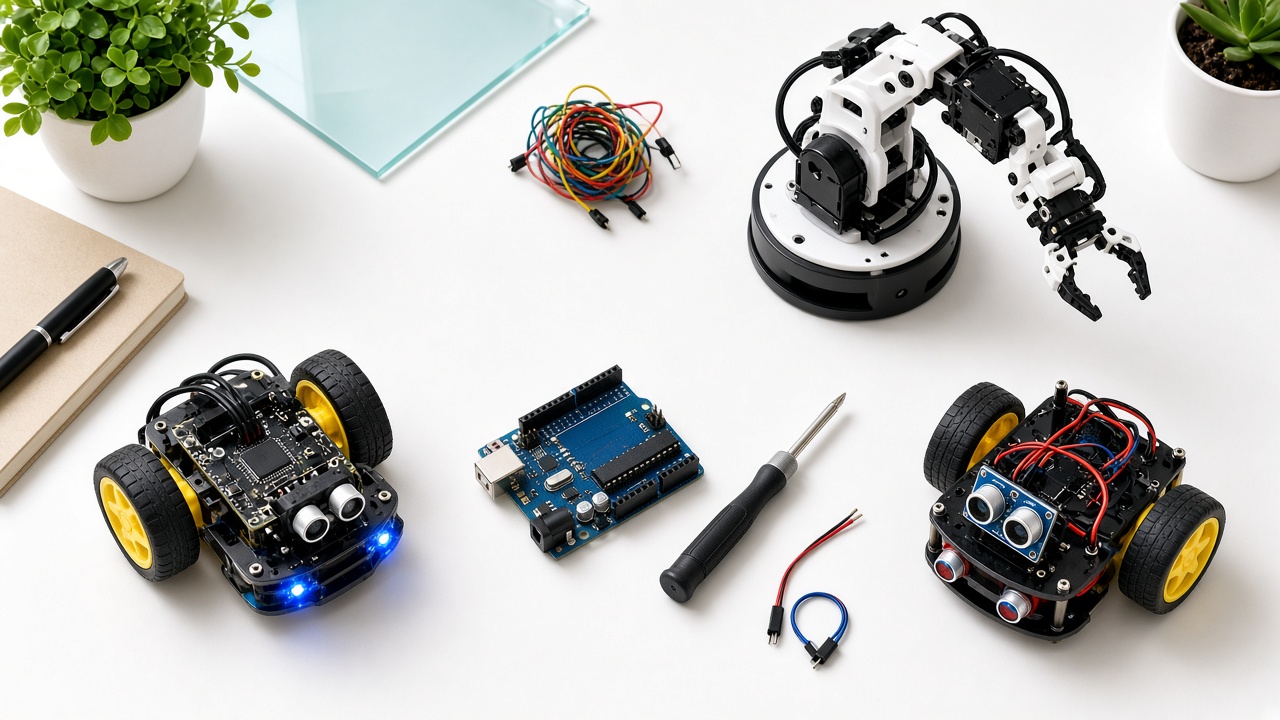
Project ideas for school students. 1. A rock, paper, scissors recogniser using a webcam 2. A model that tells two classroom objects apart 3. A sound classifier for claps versus whistles 4. A simple predictor of next-day temperature trend from a small, self-collected data set 5. A study of how model accuracy changes when you add more training examples. Each project teaches data collection, training, testing, and honest reporting of results.
Frequently asked questions
Q: Is machine learning the same as artificial intelligence? A: Not exactly. Artificial intelligence is the broad goal of making machines do tasks that seem intelligent. Machine learning is one important method within AI, where systems learn patterns from data.
Q: At what age can a student start learning machine learning? A: Concepts like "learning from examples" can be introduced through games from around middle school. Hands-on model training with beginner tools suits many students in the same age range, while coding-based projects are usually better from the senior school years.
Q: Do I need an expensive computer? A: For beginner projects, an ordinary computer with an internet connection is typically enough. Larger models need more power, but those are not necessary when you are starting out.
Explore AI and machine learning with SheepByte
SheepByte is an AI and robotics education company based in Udaipur, Rajasthan. Our AI Learning program introduces students to machine learning through hands-on, age-appropriate projects, supported by Coding Bootcamp, Robotics Lab, Innovation Club, and STEM Integration. We run workshops in Jaipur, Delhi, and online.
To find the right fit for your child or school, write to support@sheepbyte.com or visit sheepbyte.com.